6 products · instant price
Glass table tops cut to size
A glass top made for your table: round, square or rectangular, cut to your measurements. Polished edges and toughening are selected by default. Square and rectangular tops can have safety (tipped) corners or rounded corners.
Read more
Use a 6mm top to protect a timber dining table. Choose 10mm or 12mm when the glass is the table itself, sitting on a base or trestles.
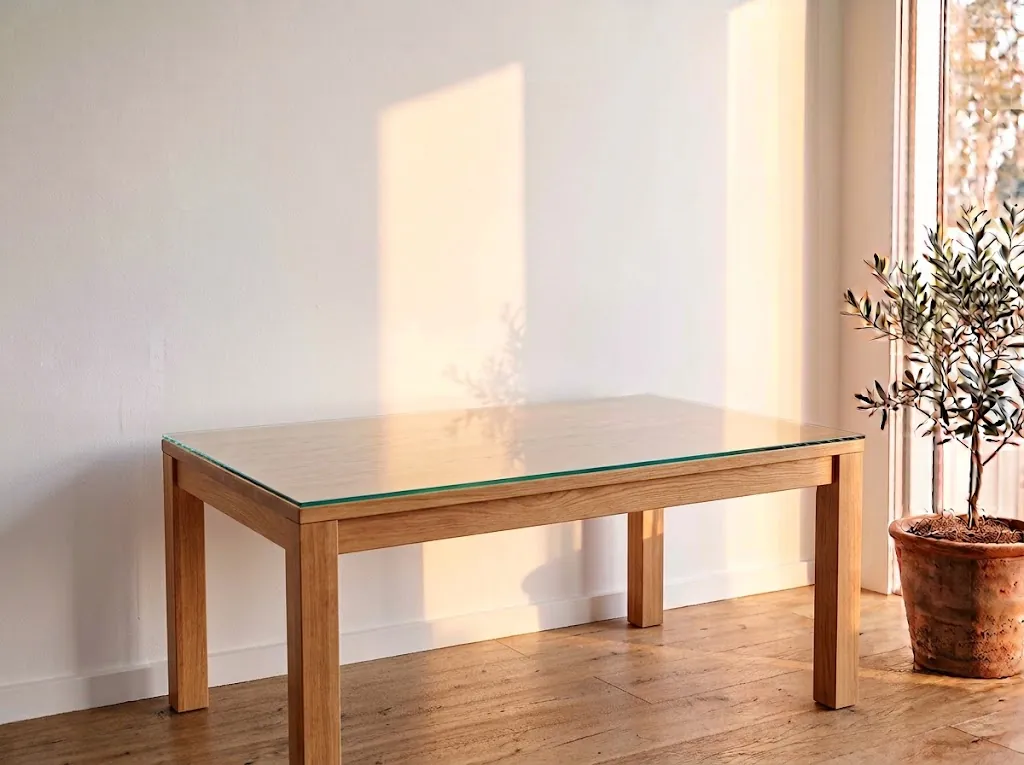
6mm Clear Glass Table Protector
Lays over a timber or stone top to protect it.
Price as you type8mm Clear Glass Table Top
Coffee tables and side tables on a solid frame.
Price as you type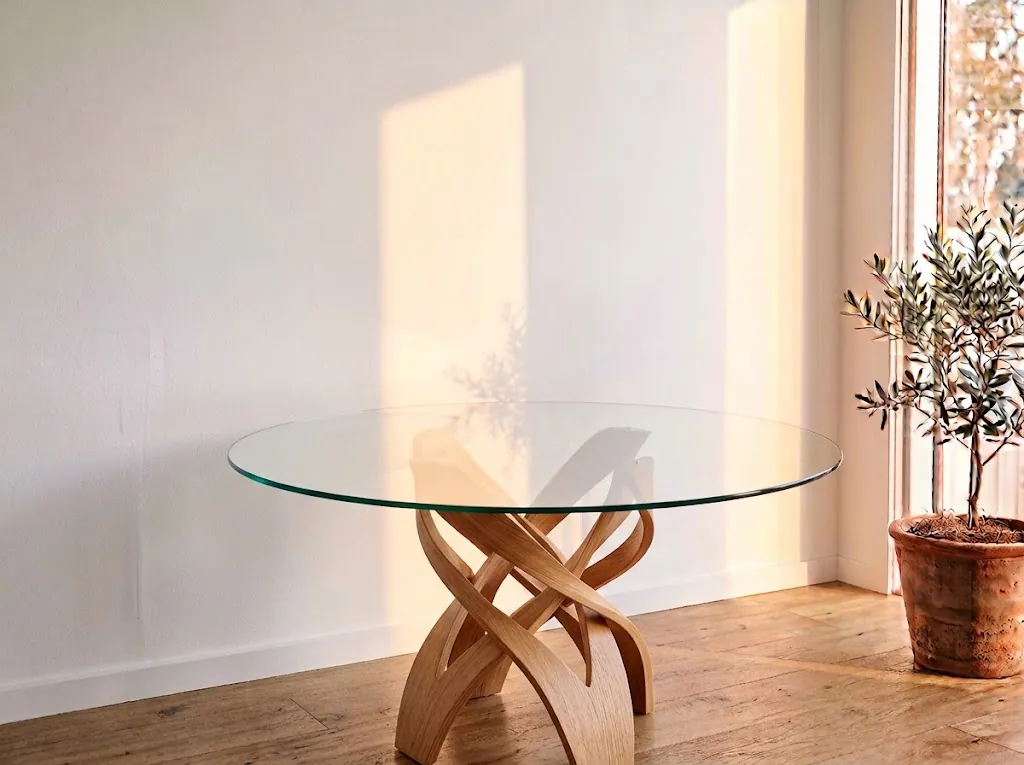
10mm Clear Glass Table Top
The standard for dining tables.
Price as you type10mm Low Iron Glass Table Top
Extra clear. No green tint at the edge.
Price as you type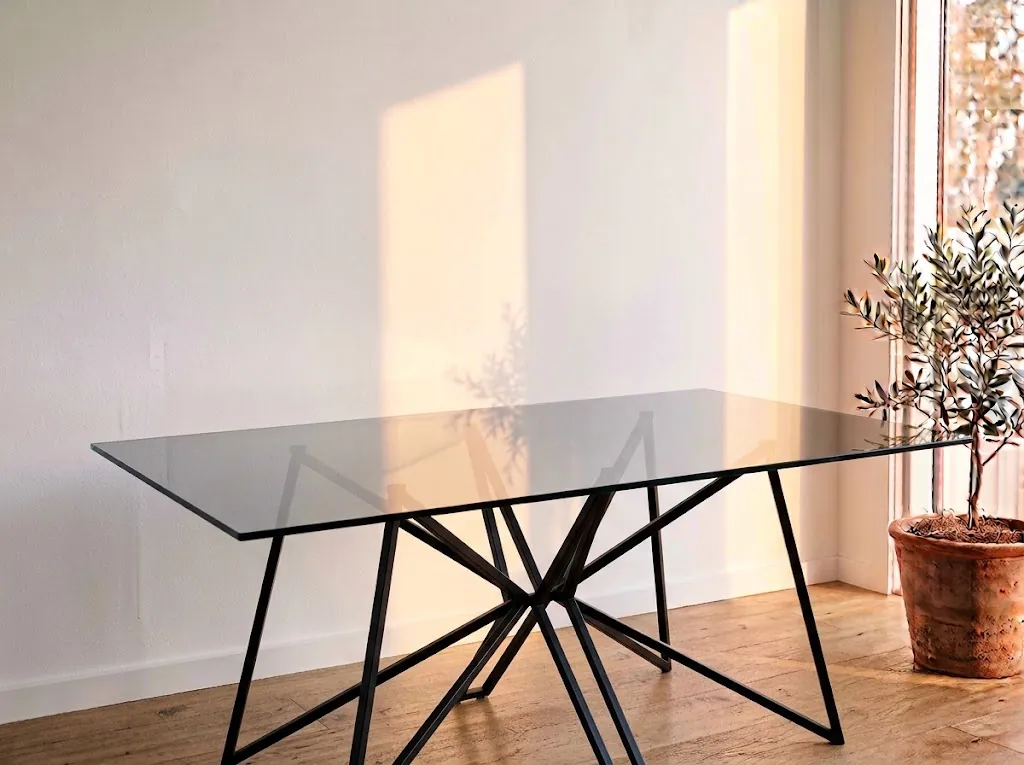
10mm Grey Glass Table Top
Tinted grey. Hides the base, softens the look.
Price as you type12mm Clear Glass Table Top
Large tables and bases with wide supports.
Price as you typeGuides
Which glass for your table?
More details and price examples
Protector or a top on its own?
If the glass sits on an existing timber or stone table to protect it, 6mm is plenty. If the glass is the table top itself, resting on legs or a base with nothing underneath, use 10mm or 12mm.
Thickness at a glance
- 6mm: protector for a dining or coffee table, desk tops.
- 8mm: larger protectors and side tables.
- 10mm: stand-alone dining and coffee tables on a base.
- 12mm: large dining tables and tops with a big overhang.
Toughened, polished and safe corners
Table tops are toughened and polished by default: a table is leaned on, sat on and bumped, and toughened glass breaks into small blunt pieces rather than sharp shards. Rounded safety corners are worth adding on rectangular tops, especially with children around.
Measuring a round table
Measure the diameter across the widest point in two directions. For a protector, order the same size or a few millimetres smaller so the edge does not overhang the timber.
Measuring a rectangular table
Measure the length and width of the top in millimetres, at both ends and in the middle, and use the smallest figure. For a protector, most people take about 10mm off each side so the glass sits just inside the edge, for example 1500 × 900mm glass on a 1520 × 920mm table.
Clear, low iron or grey?
- Clear: the standard choice. It has a slight green tint that you mainly see on the edges.
- Low iron: whiter and brighter, best over white, oak or light stone where green would show, and on 10mm and 12mm tops.
- Grey: a tinted top for darker timber, metal bases and a more modern look.
Living with a glass top
Put small clear bumpers under the glass so it does not slide and air can move under it. Toughened glass handles hot plates and cups well, but use a mat under very hot pans. Clean with a soft cloth and glass cleaner; avoid abrasive pads.
Lifting and placing the glass
Glass weighs about 2.5kg per square metre for every millimetre of thickness. A 6mm protector 900 × 1800mm is about 24kg and a 10mm top 1000mm round is about 20kg, so plan for two people when it arrives.
Price examples
| Job | Total incl. delivery |
|---|---|
| Dining table protector, 6mm, 900 × 1800mm | $393.65 |
| Coffee table top, 10mm, 600 × 1200mm | $405.15 |
| Round dining top, 10mm, 1000mm diameter | $718.39 |
Single piece, delivered to a Perth suburb on our list. Delivery is $69 per order and nothing on orders of $500 or more. Enter your own size on the product page for an exact price.
Questions
Should my table top be toughened?
Yes, we strongly recommend it, which is why it is selected by default. A table top gets knocked, leaned on and has hot dishes put on it. Toughened glass is several times stronger than ordinary glass and, if it does break, it breaks into small blunt pieces rather than long shards.
What are safety corners?
On a square or rectangular top, each of the four corners is tipped: the sharp point is cut off and polished. The corner is less likely to catch skin or clothing, or chip when it is knocked, and the top still looks square. It is $37.58 for all four corners. For a visibly round corner, choose a radius under Rounded corners instead. Worth choosing if children are around or the table sits where people walk past it.
What thickness do I need?
6mm to protect an existing table, 8mm for a small glass-topped side or coffee table on a solid frame, 10mm for most dining tables where the glass is the top, 12mm for large tables or bases with widely spaced supports. The table top thickness guide goes through this in more detail.
How do I measure a round top?
Measure the widest point straight across the centre, in millimetres. For a table protector, measure the top of the table and decide whether you want the glass flush with the edge or a few millimetres inside it.
Low iron or clear?
Clear glass has a green tint you can see at the edge and through thick pieces. Low iron is much whiter, so it looks better over white or light timber and on 10mm and 12mm tops where the green is more obvious.
Will a 6mm glass protector scratch my timber table?
Use small clear bumpers under the glass. They stop it sliding, let air under it and keep the glass off the timber finish.
Should the glass be the same size as my table?
For a protector, a little smaller is usual, about 10mm in from each edge, so the glass edge is not knocked. For a top that sits on a base, order the exact size you want the finished table to be.
Can you cut an oval or a shape?
Rectangles, squares and circles can be ordered online. For an oval or a custom shape, email us a drawing or template before ordering and we will price it.